
Roxiva and Meditation, Supporting Access to Meditative States
Roxiva is sometimes compared with meditation, as if the two are alternatives. In practice, that comparison misses something important.
If you want the simple overview of what happens in a session, start here, Roxiva sessions with Emily Kennett.
Roxiva and meditation are not opposing approaches. They often work together. For some people, Roxiva makes it easier to enter a meditative state, particularly when settling or focusing is difficult at the start.
A Bridge Into Stillness
If you already understand meditation, but you do not always feel able to reach it, this page on Roxiva and meditation is for you. Not as a replacement for practice, more as a way of supporting access, especially when the nervous system is busy or guarded.
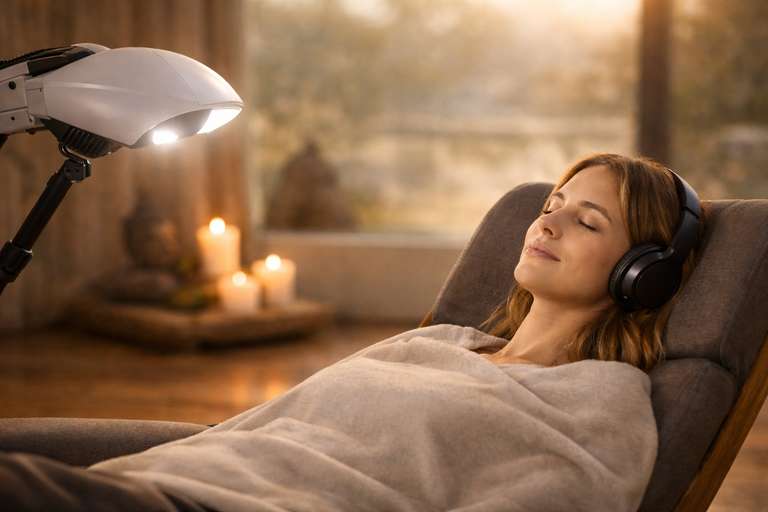
Sometimes the shift happens through effort and repetition. Sometimes it happens because the body finally feels safe enough to soften. Roxiva can help create those conditions.
This is really about nervous system regulation. When the system settles, attention stops fighting itself, and the state becomes available again.
Meditation is a state, not just a technique
Meditation is often taught as a practice, focusing on the breath, observing thoughts, returning attention. But underneath the technique is a state, a particular quality of awareness, and a particular pattern of nervous system activity.
Many people understand meditation intellectually but struggle to reach that state reliably. The difficulty is not unwillingness or lack of effort. It is often about access, and this is where Roxiva and meditation can work well together.
In simple terms, the mind might want stillness, but the body is still scanning. When the body is scanning, attention keeps getting pulled into thinking, checking, or subtle bracing.
When the scanning softens, the state becomes easier to enter. It can feel almost ordinary when it happens, which is part of the point, it is a natural human capacity.
Why access can be difficult
For some nervous systems, sitting quietly increases activity rather than reducing it. When external input drops away, internal activity fills the space.
This can show up as:
- Increased thinking
- Physical restlessness
- Difficulty staying present
In those moments it can feel like meditation is something you have to reach through effort, almost like pushing through fog. But often the fog is just activation, the system is not yet settled enough to let the state come forward, and that’s where Roxiva and meditation can fit together more gently.

This is where support can matter. Not a trick, not a workaround, more like giving the nervous system something steady to organise around, so it does not have to work quite so hard.
How Roxiva supports meditation
Roxiva uses patterned light and sound to provide external structure. Rather than asking you to guide attention internally from a standing start, the system offers a rhythmic framework your nervous system can respond to.
For some people, this makes it easier to settle physical tension, reduce mental noise, and move into a quieter, more meditative state. Not by force, more like a gentle cue that says, you can soften now.
Roxiva does not replace meditation. It can act as a bridge into it.
Entering the state more quickly
Meditation practice can take time to reach a settled state, especially at the beginning of a session. Roxiva can shorten that transition for some people by supporting regulation first.
This does not mean the state is artificial or lesser. The qualities of awareness can be very similar, the route in is different.
Less effort, same destination
Meditation often involves sustained attention and gentle redirection. Roxiva reduces the amount of effort required at the beginning, so you spend less time wrestling with the start, and more time actually being in the state.
It can also reduce self monitoring, which is a quiet form of tension in itself. When you stop checking whether you are doing it right, the nervous system tends to drop another notch.
There is a light spiritual element here, I think, but it is not complicated. When the system settles, people often feel more connected, to themselves, to life, to something calmer. That connection is usually the by product, not the goal.
Using Roxiva alongside meditation practice
Some people use Roxiva before meditation, to help settle. Some use it during meditation, as a support. Others use it occasionally, when access feels harder than usual.
Over time, some people find they rely on it less, because the nervous system becomes more familiar with the pathway into stillness. There is no required progression and no correct way to combine the two.
This is about support, not substitution. Roxiva does not teach meditation skills in the way traditional practice does. It does not replace learning how to work with attention or awareness.
If you want a simple, mainstream overview of how stress can affect the body and mind, the NHS has a helpful explanation here.
How this fits with Roxiva sessions
This page looks specifically at the relationship between Roxiva and meditation. For a fuller explanation of how Roxiva sessions are structured and used, including how they support regulation and awareness, see the main overview of Roxiva sessions.
FAQ About Roxiva and Meditation
No, Roxiva and meditation are different things. Meditation is a skill and a state, Roxiva is a light and sound experience that supports nervous system regulation so the meditative state becomes easier to access. Many people use Roxiva and meditation together, using Roxiva as a bridge into stillness, then continuing their practice with less effort at the start.
Often it is an access issue, not a willpower issue. If the nervous system is still scanning, bracing, or running in stress mode, the mind will keep producing thoughts and distractions to match that state. Meditation can feel like pushing through fog, when the fog is really activation. Roxiva and meditation can help because Roxiva supports regulation first, so attention stops fighting itself and the state becomes easier to enter.
Roxiva provides steady rhythmic input through light and sound, giving the nervous system something consistent to organise around. Instead of trying to force attention inward while the system is activated, the rhythm supports the brain to shift state more naturally. For many people this means less mental noise, less restlessness, and a smoother transition into the quieter awareness that meditation is aiming for. This is why Roxiva and meditation often fit together so well.
A simple approach is Roxiva first, then meditation straight afterwards while you are already settled. You can also meditate gently during the session if that feels natural, focusing on breath or body awareness without trying to force anything. There is no correct method, the best way to combine Roxiva and meditation is the one that helps you arrive more easily and practise more consistently.
During the session, people often notice the body softening, breathing deepening, and thoughts slowing down without effort. Afterwards it is common to feel calmer, clearer, or more grounded, as if your system has had a reset. Some people feel pleasantly tired or emotionally lighter. Occasionally emotions feel closer to the surface for a short time, which can be part of the nervous system settling when Roxiva and meditation are used together.
For most people Roxiva is gentle and well tolerated, but it is not for everyone. If you have epilepsy, a history of seizures, significant light sensitivity, or a medical condition that could be affected by flickering light, it is important to check first and take medical advice if needed. If you are unsure, the safest next step is to talk it through before booking, so the session can be adapted, or avoided, appropriately.
A next step
If meditation feels familiar but hard to access at times, support rather than effort may be what is needed. If you are curious about what a session is like in practice, the main Roxiva sessions page will give you the fuller picture.
And if you are already practising meditation, you do not have to stop doing that. Think of this as a way of helping the body arrive, so your practice has somewhere steadier to land.
Related Pages
If you’d like to explore the wider nervous system themes behind this work, these pages may help.
- Nervous System Regulation For Stress And Anxiety
- Vagus Nerve Healing
- The Polyvagal Ladder
- Emotional Regulation Therapy
- Understanding The Cell Danger Response
If you have a question, or you’d like to explore whether a Roxiva session would support you, you can contact Emily.